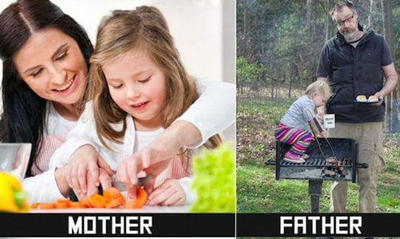
First of all you have to start by greeting everyone that’s presents in the debate ground by following this our amazing guide by saying:
Hello everyone and good day ladies and gentle men, panel of judges, accurate timekeeper, my fellow student, my co-debators and those presents to witness todays debate.
My name is Itumo Nancy {you can replace the name with yours} i am here to argue on the motion who states that Fathers Are Better Than Mothers but before i proceed, let us know the definition of Fathers Are Better Than Mothers and their importance and roles in our lives.
Parenthood is a complex and multifaceted responsibility. Traditionally, society has revered mothers as the emotional core of the family, while fathers have been cast in the role of providers and disciplinarians. In recent years, however, the tide has begun to shift. As societal norms evolve and gender roles blur, many are starting to question long-held beliefs about parental roles and contributions.
This debate explores the controversial assertion that fathers are better than mothers. While this stance may seem provocative, it is based on specific tangible points related to discipline, emotional balance, role modeling, long-term influence, and resilience under pressure. It is important to acknowledge that this position does not claim mothers are unimportant but argues that fathers may offer more beneficial qualities in specific areas of child development and family dynamics.
Sir/Ma please permit me to qualify my speeches with the following points of mine fathers are better than mothers:
1. Fathers Foster Discipline and Authority More Effectively
One of the key areas where fathers often excel is in instilling discipline and a sense of authority. Numerous psychological and sociological studies have demonstrated that children, particularly boys, respond more positively to paternal figures when it comes to establishing boundaries and reinforcing consequences. This stems not only from cultural conditioning but also from the difference in approach.
Fathers are typically more consistent in their discipline, often sticking to rules and limits without being overly influenced by emotional appeals. This firm approach helps children understand the importance of responsibility and consequences. According to research from the American Psychological Association (APA), children with involved fathers are more likely to exhibit better behavioral control and lower rates of delinquency.
This is not to say that mothers cannot discipline effectively, but rather that the paternal approach tends to emphasize structure and hierarchy, which can be beneficial for developing self-regulation and respect for authority. Especially in adolescence, when children begin to test boundaries, a strong paternal presence can serve as a deterrent against poor decision-making.
2. Fathers Promote Emotional Stability Through Controlled Attachment
While mothers are often viewed as emotionally nurturing, this can sometimes lead to over-attachment or emotionally dependent behavior in children. Fathers, on the other hand, typically foster a different form of emotional engagement that encourages independence and emotional resilience.
Studies from the National Institute of Child Health and Human Development (NICHD) suggest that children with active fathers show higher levels of emotional security and lower levels of anxiety. This is partially because fathers often encourage risk-taking and problem-solving, pushing children to face challenges rather than shielding them from adversity.
The emotional stability provided by fathers is less about constant reassurance and more about promoting self-confidence and inner strength. Children raised with this balance are often better equipped to handle stress, setbacks, and interpersonal conflicts later in life. They are less prone to emotional volatility and more likely to develop healthy coping mechanisms.
3. Fathers Serve as Strong Role Models, Particularly for Gender Identity
A crucial, yet often overlooked, benefit of active fatherhood is the role fathers play in shaping identity, particularly gender identity and societal roles. Boys often look to their fathers to understand what it means to be a man, while girls may base their understanding of male behavior and relationships on their fathers’ conduct.
Fathers can model behaviors such as responsibility, work ethic, emotional restraint, and integrity. In homes where the father is actively engaged, both sons and daughters tend to perform better academically and socially. According to the U.S. Department of Education, children with involved fathers are 40% more likely to earn A’s and are significantly less likely to be suspended from school.
Moreover, when fathers model respectful and egalitarian treatment of their partners, they help combat cycles of domestic violence and sexism. This modeling can be more influential than maternal guidance alone because it represents the lived behavior of the other half of the gender equation.
4. Fathers Often Have Greater Long-Term Impact on Career and Life Success
One of the most measurable advantages children gain from involved fathers is in the realm of long-term career and life success. Children with engaged fathers are more likely to attain higher education, delay early parenthood, and secure stable employment. This has been documented across various cultural and socioeconomic groups.
Fathers often emphasize long-term thinking, goal-setting, and achievement. They tend to be more strategic in preparing their children for the adult world. In contrast, mothers may focus more on day-to-day emotional well-being, which, while important, may not provide the same push toward long-term ambition and resilience.
A 26-year longitudinal study by the University of Michigan found that father involvement during childhood was a strong predictor of adult success, even more so than mother involvement when it came to financial stability and occupational achievement.
This does not devalue a mother’s contribution but highlights the unique and often underappreciated influence of a father’s guidance on shaping the future trajectories of their children.
5. Fathers Handle Stress and Crisis Situations with Greater Composure
In family dynamics, crisis situations are inevitable—whether financial, emotional, or logistical. In many of these situations, fathers have been observed to handle stress with a more composed, solution-focused demeanor. This is not a judgment of emotional expression but a recognition of differing coping strategies.
Fathers tend to compartmentalize problems and focus on practical resolutions, which can prevent emotional chaos from escalating within the household. For example, during periods of economic hardship, studies have found that paternal calm and problem-solving play a crucial role in maintaining family stability. This ability to shield the family from panic and model resilience becomes a cornerstone of children’s understanding of crisis management.
In high-stakes situations like accidents, emergencies, or sudden disruptions (e.g., moving homes, losing a job), the father’s capacity to maintain composure can set the emotional tone for the entire family. This is a tangible benefit that contributes to psychological security and modeling of effective adult behavior.
In conclusion: you would say “With the above stated points of mine, i believe i have been able to convince and to confuse you that Fathers are better than Mothers”.
READ ALSO: Debate: Health is Better Than Wealth {Argue or Against} The Motion

Danz has extensive experience as a senior editor at renowned publications like Money, Consumer Reports, Success, and Reader’s Digest. As a writer, his work has appeared in prestigious outlets such as The New York Times, Parade, Smithsonian, National Geographic Traveler, Investopedia, PBS NextAvenue, and Wirecutter. With over seven years of expertise, Danz specializes in personal finance, Sports, Trends and consumer topics, contributing to both major print and online platforms.