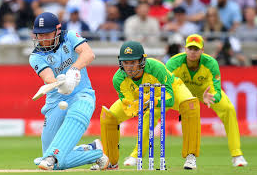
Cricket often referred to as the “gentleman’s game,” is a sport that transcends borders, cultures, and generations. Its origins trace back centuries, and today, it is a global phenomenon, drawing millions of fans from every corner of the globe.
Whether it’s the legendary Test matches that unfold over five days, the high-paced drama of One Day Internationals (ODIs), or the exhilarating intensity of Twenty20 (T20) cricket, the sport has evolved into one of the most followed and celebrated games worldwide.
Lets take a deep dive into the world of crickets like exploring its history, rules, formats, iconic players, and why it continues to captivate audiences, particularly in countries like India, Australia, England, Pakistan, and South Africa.
The Origins of cricket
Cricket’s origins are believed to trace back to the 16th century in England. The game is thought to have been played by children in rural areas, and over time, it evolved into a structured sport with formalized rules. By the 18th century, cricket had gained significant popularity, especially in England, where it became the national pastime.
The game’s first international match was played between Canada and the United States in 1844. However, the sport truly began to take its global shape with the establishment of the International Crickets Council (ICC) in 1909, uniting cricketing nations and formalizing the structure of international cricket.
The Basics How Cricket is Played
At its core, crickets is a bat-and-ball game, played between two teams of eleven players each. The game unfolds in a field with a rectangular pitch at the center, where the key action occurs. The pitch has three stumps at each end, and a bails rests on top of them, forming a wicket.
-
Batting: One team bats while the other bowls. The batting team aims to score as many runs as possible by hitting the ball and running between wickets or by hitting boundaries (4 or 6 runs).
-
Bowling: The bowling team tries to dismiss the batsmen by getting them “out.” This can be done through various methods like hitting the stumps, catching a ball hit by the batter, or causing the batter to commit errors while batting.
-
Fielding: The fielding team is spread across the field to stop the batsmen from scoring runs. Some players are in strategic positions to catch the ball, while others are close to the pitch to stop quick singles.
-
Overs: The bowler delivers six balls in a set of six deliveries, called an over. A game can consist of varying numbers of overs depending on the format being played.
Cricket Formats: Test, ODI, and T20
Crickets is played in three distinct formats, each offering a different experience for players and fans.
Test Cricket
Test crickets is the oldest and most traditional format of the game. Matches are played over five days, with each team having two innings. A match is considered a “draw” if no team wins within the allotted five days. This format is often referred to as the “pinnacle” of crickets, requiring patience, skill, and strategy.
- Duration: 5 days
- Innings per Team: 2
- Overs per Innings: Unlimited (generally 90 overs in a day)
- Key Features: Long duration, focus on endurance, strategies, and individual performances.
Iconic Tests: The Ashes series between England and Australia, often regarded as one of the greatest rivalries in world sport, is a classic example of Test crickets at its finest.
2. One Day International (ODI)
ODIs are limited-over matches where each team is given a maximum of 50 overs to score as many runs as possible. The first-ever ODI was played in 1971 between Australia and England, and since then, ODIs have become one of the most popular formats in world crickets.
- Duration: Around 8 hours
- Innings per Team: 1
- Overs per Innings: 50
- Key Features: Fast-paced, team-based strategies, and crucial moments of tension, such as the last few overs.
Iconic ODIs: The 1983 ICC Crickets World Cup final, where India defeated the West Indies, is one of the most memorable moments in cricket history.
3. Twenty20 (T20) Cricket
Introduced in 2003, T20 is the shortest format of crickets, where each team is allowed only 20 overs to score runs. T20 crickets is characterized by high-energy play, with batsmen attempting aggressive shots, and bowlers using variations to outsmart the opposition. This format has dramatically increased the global popularity of cricket, thanks in part to the thrilling action it offers in a compressed time frame.
- Duration: 3-4 hours
- Innings per Team: 1
- Overs per Innings: 20
- Key Features: Fast-paced, entertainment-oriented, and a shorter, more accessible experience for new fans.
Iconic T20s: The Indian Premier League (IPL) has revolutionized T20 crickets, bringing together some of the best cricketers from around the world in a high-stakes, commercialized format.
Cricket Equipment: The Bat, Ball, and Gear
The essential equipment for a game of cricket includes:
-
Bat: A crickets bat is typically made of willow and is used to hit the ball. The size, weight, and shape of a bat can vary depending on the player’s preferences.
-
Ball: The ball is made of leather and is hard with a cork center. The ball’s seam plays an important role in how it moves through the air, with bowlers using it to their advantage to create swing or spin.
-
Protective Gear: Players use various protective equipment, including helmets, pads, gloves, and thigh guards, to safeguard against injury while batting and facing fast deliveries.
-
Clothing: Traditionally, crickets players wear white clothing in Test crickets, while colored clothing is used in limited-overs formats such as ODIs and T20s.
Iconic Cricketers Who Defined the Sport
Over the years, numerous players have graced the field and etched their names into cricketing history. Some of these players became not just national heroes, but global icons. Here are a few of them:
1. Sachin Tendulkar (India)
Regarded as the “God of Cricket,” Sachin Tendulkar holds numerous records in international cricket, including being the first player to score 100 international centuries. His impact on the sport, particularly in India, is immeasurable.
2. Sir Donald Bradman (Australia)
Bradman’s batting average of 99.94 in Test crickets remains an unmatched feat. His legendary status in cricket history is universally acknowledged.
3. Virat Kohli (India)
Kohli is one of the modern-day legends of the game. Known for his aggressive batting style and consistency across formats, Kohli has become one of the most popular cricket figures globally.
4. Shane Warne (Australia)
A spin bowling genius, Warne was one of the most charismatic and successful players in cricket history, with his unique leg-spin deliveries bamboozling batsmen across the globe.
5. Jacques Kallis (South Africa)
Kallis is one of the greatest all-rounders of all time. His ability to contribute both with the bat and the ball made him an invaluable asset to the South African team.
The Global Impact of Cricket
While cricket originated in England, its reach has expanded worldwide. Today, countries such as India, Australia, Pakistan, New Zealand, South Africa, and the West Indies are cricketing powerhouses. The sport’s fanbase is immense, particularly in India, where it is almost a religion, with millions following the national team’s every move.
-
India: The Indian Premier League (IPL) has taken cricket to new heights, becoming the most-watched cricket tournament globally. India’s success in international cricket, including their 2007 T20 World Cup win and 2011 ICC Cricket World Cup win, has made the country a central figure in world cricket.
-
Australia: Australia’s dominance in the sport is undeniable, with multiple World Cup victories and a long-standing tradition of producing world-class players.
-
Pakistan: Known for its unpredictability, Pakistan has produced many brilliant cricketers, including the likes of Imran Khan, Wasim Akram, and Shahid Afridi.
-
England: The birthplace of cricket, England remains a significant force, with their 2019 ICC Cricket World Cup victory marking a historic achievement.
Read Also: Prof Adamu Ahmed Biography: Age, Wife, Education, Career, Personal Life And Appointment
The Future of Crickets
The future of crickets is bright, with the game continuing to evolve and attract new audiences. T20 cricket has ushered in a new era of commercial success, and leagues like the IPL, Big Bash League, and Caribbean Premier League are helping grow the game globally. Additionally, innovations like technology-driven umpire assistance (like Hawk-Eye and DRS) are improving the accuracy of decision-making.
Cricket’s appeal is timeless, and it remains a unifying force, bringing together people from all walks of life. The growth of women’s cricket, highlighted by events like the ICC Women’s World Cup, is also creating new opportunities for female cricketers to shine on the global stage.
Conclusion
Cricket’s blend of tradition, skill, strategy, and entertainment ensures that it remains one of the most beloved sports in the world. Its rich history, iconic players, and varied formats make it a game like no other. Whether you’re a casual viewer or a die-hard fan, there’s no denying the deep emotional connection that fans share with this wonderful sport.
As crickets continues to evolve, its status as a global sport is only set to rise, offering excitement, passion, and moments of pure brilliance for generations to come.

Danz has extensive experience as a senior editor at renowned publications like Money, Consumer Reports, Success, and Reader’s Digest. As a writer, his work has appeared in prestigious outlets such as The New York Times, Parade, Smithsonian, National Geographic Traveler, Investopedia, PBS NextAvenue, and Wirecutter. With over seven years of expertise, Danz specializes in personal finance, Sports, Trends and consumer topics, contributing to both major print and online platforms.